Eating wheat, barley or rye
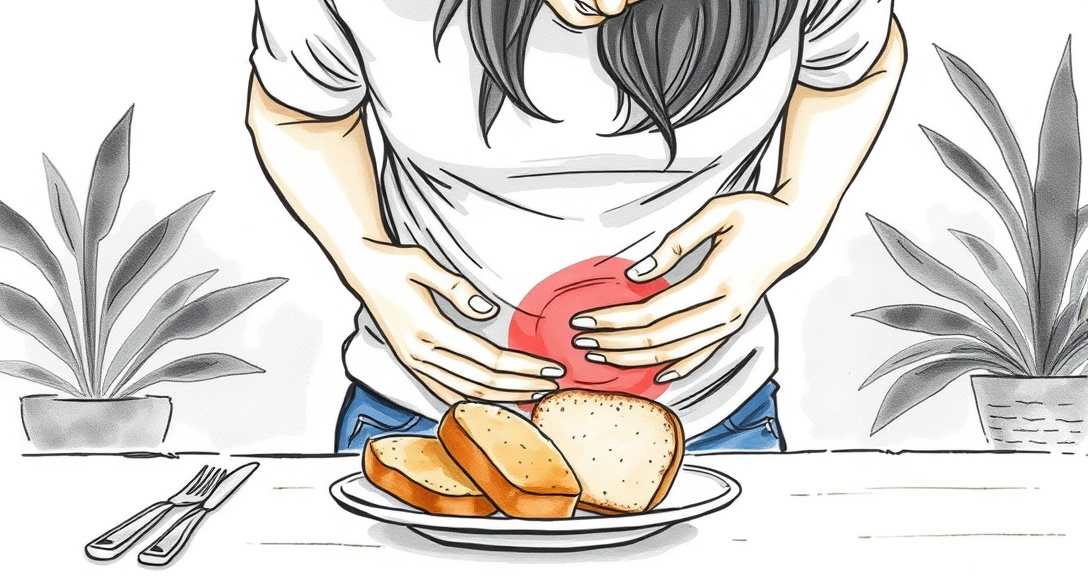
For someone with celiac disease, eating wheat, barley or rye sets off an autoimmune response, not a simple digestive complaint. Gluten, the storage protein found in these three grains, is mistaken by the immune system for a threat, and the resulting attack targets the lining of the small intestine itself rather than passing through as an isolated stomach upset.
That attack flattens the villi, the finger-like projections that absorb nutrients from food. Over time this villous atrophy reduces the surface area available for absorption, which is why celiac disease often shows up first as unexplained iron-deficiency anemia, weight loss or low bone density rather than as cramping. Digestive symptoms — diarrhea, bloating, gas — appear alongside non-digestive ones like fatigue, joint pain, skin rash and, in children, delayed growth.
Diagnosis follows a set order: a blood test looking for specific antibodies, and if that is positive, an intestinal biopsy to confirm the damage directly. Testing has to happen while gluten is still part of the diet, because removing it early can suppress the antibody response and the visible intestinal changes, producing a false negative that closes the door on an accurate diagnosis. The Gluten-Free Diet review published in PMC describes this diet as the only established treatment for celiac disease — not a preference but a lifelong medical necessity that, once started, allows the damaged intestinal lining to heal.
Symptoms after gluten but celiac tests negative and wheat allergy excluded
When someone reacts to gluten but blood tests for celiac disease come back negative and a wheat allergy has been ruled out, the remaining explanation is non-celiac gluten sensitivity. This is a real symptomatic response — bloating, brain fog, fatigue, joint pain — that occurs without the intestinal damage seen in celiac disease and without the immediate immune reaction seen in a wheat allergy.
Because there is no blood marker or biopsy finding that confirms it, the diagnosis is made by process:
- Confirm celiac disease and wheat allergy have both been tested and excluded while gluten was still being eaten.
- Remove gluten completely for a defined stretch of time and track symptoms.
- Reintroduce gluten deliberately and note whether the same symptoms return.
If symptoms clear on removal and return on reintroduction, the pattern supports non-celiac gluten sensitivity, and management is simply avoiding gluten to the level of tolerance — unlike celiac disease, where the Mayo Clinic notes there is no safe threshold and the diet must be strict and permanent.
Symptoms persist despite avoiding obvious gluten foods
When symptoms continue even though bread, pasta and other obvious sources are gone, the most common explanation is gluten that never showed up on a label — or gluten picked up from a shared surface. Sauces, soups, spice blends, processed meat and beer are frequent hidden sources, since gluten-containing grains are often used as thickeners, fillers or fermentation bases without appearing as an obvious ingredient.
The other route in is physical, not written on any label: a toaster that has held wheat bread, a cutting board, a fryer used for breaded food, or a colander that previously drained pasta. None of these show up on an ingredient list, but all of them can transfer enough gluten to provoke a reaction in someone with celiac disease.
The fix follows in order: recheck every label, including condiments and anything processed; eliminate shared equipment and surfaces in the kitchen; and if symptoms still don't settle after both are addressed, revisit the original diagnosis, since a small number of people have other conditions or, rarely, a form of celiac disease that resists standard dietary treatment.
Bloating and pain after bread
Bloating and pain after eating bread does not automatically mean gluten is the trigger — wheat also contains fructans, a type of fermentable carbohydrate grouped under FODMAPs, and these are a well-documented cause of bloating in irritable bowel syndrome independent of gluten itself. Someone can react to a slice of wheat bread and tolerate gluten from another source entirely, which points to the carbohydrate, not the protein.
Untangling the two requires ruling out celiac disease first — with blood testing done while gluten is still in the diet — before assuming the trigger is gluten and adopting a lifelong restriction that may not be necessary. Once celiac disease and wheat allergy are excluded, a structured low-FODMAP trial, rather than a gluten-free diet, is the way to isolate whether fructans or another fermentable carbohydrate is the actual cause. Treating the real trigger means restriction sized to the actual problem rather than an unnecessarily broad diet.
Celiac disease
Celiac disease is an autoimmune condition in which gluten triggers the immune system to damage the lining of the small intestine, and it currently affects roughly 1% of the population, with higher rates among people with type 1 diabetes, autoimmune thyroid disease, and first-degree relatives of someone already diagnosed. It is confirmed by blood testing and biopsy, not by symptom pattern alone, and the Celiac Disease Foundation's guide to gluten-free foods treats the resulting diet as medical management rather than a lifestyle choice.
Gluten-free diet
A gluten-free diet means the complete, lifelong removal of wheat, barley and rye and every product derived from them, and it remains the only established treatment for celiac disease. There is no maintenance dose or occasional exception built into the diet the way there might be with other dietary restrictions — the PMC review frames continued gluten exposure in a diagnosed celiac as ongoing intestinal injury, not a minor lapse.
Non-celiac gluten sensitivity
Non-celiac gluten sensitivity describes symptoms that appear after eating gluten without the antibody markers or the intestinal damage that define celiac disease. It sits between celiac disease and simple food intolerance: real, gluten-triggered, but without the autoimmune mechanism, which is why the management burden — how strict, how permanent — is generally lighter than for celiac disease.
What exactly does gluten-free mean?
Under United States regulation, "gluten-free" on a label means the product contains fewer than 20 parts per million of gluten, a threshold set by the FDA's gluten-free labeling rule. It does not mean zero gluten, and it does not mean low-gluten in some looser, informal sense — it is a specific, enforceable regulatory line drawn at a level research has associated with safety for most people with celiac disease.
That distinction matters because "gluten-free" is a legal claim a manufacturer makes about a finished product meeting a tested threshold, while "low-gluten" or "mostly gluten-free" are not defined terms at all. A product can carry the gluten-free label and still have been made in a facility that processes wheat, provided testing shows the finished product falls under 20 ppm — which is why the label describes the product, not the entire environment it came from.
What do gluten-free people eat?
People on a gluten-free diet build meals around foods that never contained gluten to begin with, plus products manufactured or labeled specifically to meet the FDA's threshold. Naturally gluten-free whole foods include:
- Rice, corn, and quinoa
- Potatoes and other starchy vegetables
- Fresh fruits and vegetables
- Eggs, plain meat, poultry and fish
- Dairy in its unflavored form
- Legumes, nuts and seeds
The UC Davis Health guide to gluten-free eating points out that the risk isn't in these foods themselves but in how they're processed afterward — a plain egg is gluten-free, but an egg dish made with soy sauce, breaded coating, or a shared fryer is not. Certified gluten-free flours made from rice, corn or certified oats fill in for wheat-based baking and pasta.
What is gluten and why is it avoided?
Gluten is a storage protein found in wheat, barley and rye that gives dough its elasticity and helps baked goods hold their shape. It is avoided by two distinct groups for two distinct reasons: people with celiac disease must avoid it because it triggers autoimmune damage to the small intestine, and people with wheat allergy must avoid wheat because it triggers an IgE-mediated immune reaction that can include hives, swelling or anaphylaxis — a different mechanism from celiac disease entirely, even though the food avoided overlaps.
A third group, people with non-celiac gluten sensitivity, avoid gluten because it produces symptoms, without either the autoimmune or the allergic mechanism behind it. The reason for avoidance differs across all three, but the practical result — reading labels, questioning ingredients, avoiding shared surfaces — often looks the same from the outside.
Does rice contain gluten?
No — rice does not contain gluten, and it is one of the more reliable base grains for a gluten-free diet. Rice, along with corn and quinoa, is naturally free of the wheat, barley and rye proteins that trigger celiac disease and wheat allergy.
The caution applies to processing, not the grain itself: rice can pick up gluten through cross-contact if it is processed on shared equipment with wheat, cooked in the same water as pasta, or used in a packaged product — like a seasoned rice mix or a rice-based sauce — that adds a wheat-derived ingredient during manufacturing. Plain, unflavored rice from a dedicated gluten-free source carries none of that risk; a rice pilaf mix or a rice cracker with an unlisted flavoring might.
Anyone newly navigating a gluten-free diet is better served by checking a label against the FDA's 20 ppm standard and confirming a diagnosis before restricting for life — starting with a blood test while gluten is still in the diet, not after it's already gone.