
Eating wheat, barley or rye
For someone with celiac disease, eating wheat, barley or rye sets off an autoimmune response, not a digestive upset that passes on its own. The gluten proteins in these grains are recognized by the immune system as a threat, and the immune system responds by attacking the lining of the small intestine itself, a process distinct from the way an allergen or an irritant works.
That attack damages the villi, the small finger-like projections that absorb nutrients from food. Over time this produces malabsorption, and malabsorption produces the wide symptom list associated with celiac disease: diarrhea, bloating and abdominal pain, but also fatigue, anemia, bone loss, skin rashes and, in some cases, no digestive symptoms at all. The Celiac Disease Foundation and the NIDDK both describe celiac disease as a condition confirmed by testing, not inferred from symptoms.
Diagnosis follows a sequence: a blood test looking for celiac-specific antibodies, followed by an intestinal biopsy to confirm damage to the villi when blood results are positive. This order matters because both tests depend on gluten still being present in the diet — a person who has already removed gluten before testing can produce a false negative, since the antibody response and the intestinal damage both partly reverse once gluten stops. Anyone already gluten-free who wants an accurate diagnosis needs to discuss reintroducing gluten with a clinician before testing, not after.
Once celiac disease is confirmed, the only established treatment is a lifelong gluten-free diet. The Cleveland Clinic and the NHS both frame the diet this way: not a preference or a wellness choice, but the mechanism by which the small intestine is given the chance to heal. Strict avoidance allows the villi to regenerate, though healing is gradual and follow-up testing is used to confirm it rather than assumed from symptom relief alone.
Symptoms after gluten, celiac tests negative, wheat allergy excluded
If gluten brings on symptoms but celiac blood tests come back negative and a wheat allergy has been ruled out, the remaining diagnosis to consider is non-celiac gluten sensitivity. This condition produces real symptoms — bloating, pain, fatigue, brain fog — without the autoimmune antibody response or the intestinal damage that defines celiac disease, and without the IgE-mediated allergic reaction that defines wheat allergy.
There is no blood test or biopsy finding that confirms non-celiac gluten sensitivity directly; it's identified by ruling out the other two conditions first, then observing the pattern of symptoms against gluten intake. A structured process looks like this:
- Confirm celiac disease and wheat allergy have both been tested for and excluded while gluten was still being eaten.
- Remove gluten completely for a defined period, tracking symptoms in a log rather than by memory.
- Reintroduce gluten in a measured way and record whether the same symptoms return.
- If symptoms reliably return on reintroduction and were absent during elimination, the pattern supports non-celiac gluten sensitivity.
Unlike celiac disease, this condition doesn't necessarily require zero gluten for life. People with non-celiac gluten sensitivity often manage it by avoiding gluten to their own tolerance level, which several may vary between individuals, rather than following the strict cross-contact vigilance a celiac diagnosis demands. The Harvard Health discussion of gluten and general health draws this same line: reducing gluten can ease symptoms for some people without gluten being the cause of a diagnosable disease.
Symptoms persist despite avoiding obvious gluten foods
When symptoms continue even though bread, pasta and other obvious sources are gone, the most common explanation is gluten that's still getting in through routes that aren't obvious. Labels are the first place to check — gluten shows up in sauces, soups, seasoning blends, and processed meats where it functions as a thickener or filler rather than an ingredient anyone would expect.
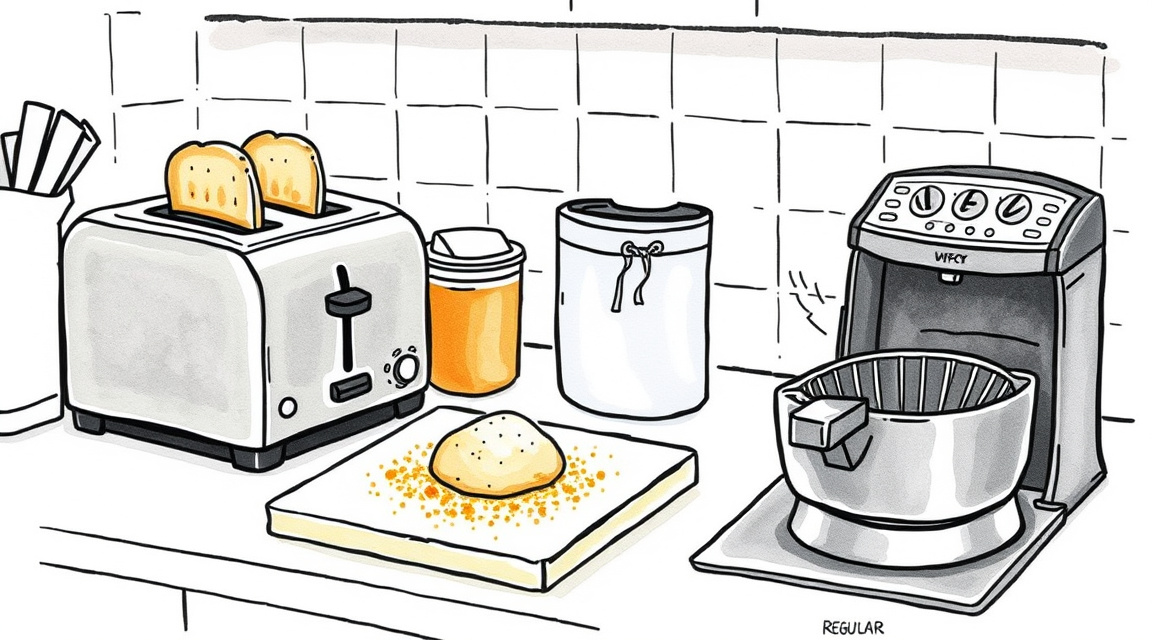
Shared preparation surfaces are the second, less visible source. A toaster used for regular bread, a cutting board, a fryer shared with breaded foods, or a colander previously used to drain wheat pasta can all transfer enough gluten to keep symptoms active even when every ingredient on the plate is gluten-free. The Celiac Disease Foundation covers this kind of exposure as separate from ingredient selection — a kitchen can stock entirely gluten-free food and still cause a reaction if equipment isn't dedicated or thoroughly cleaned between uses.
The practical sequence for someone in this position:
- Re-check every packaged label for wheat, barley, rye, or malt, including in condiments and sauces not previously suspected.
- Identify and eliminate shared equipment — dedicated toaster, separate cutting boards, no shared fryer oil.
- Give it enough time to see whether symptoms settle once those sources are removed.
- If symptoms don't resolve, revisit the diagnosis itself rather than assuming stricter avoidance will eventually work.
That last step matters because a diet that appears to be failing is sometimes evidence the original diagnosis needs reassessment, not evidence the person isn't being careful enough.
Bloating and pain after bread
Bloating and pain after eating bread doesn't automatically mean gluten is the trigger — wheat contains fructans, a type of FODMAP, that can cause the same symptoms in people with no celiac disease and no gluten sensitivity at all. FODMAPs are fermented by gut bacteria and draw water into the intestine, producing gas, bloating and pain that looks identical to a gluten reaction from the outside.
This distinction matters because someone with FODMAP sensitivity or IBS can often tolerate gluten itself perfectly well while reacting to the fructans that happen to be concentrated in wheat. Removing gluten in that case brings relief only because most gluten-free swaps also happen to be lower in fructans, not because gluten was ever the problem.
The order to work through this is testing before self-diagnosing:
| Condition | Mechanism | Confirming test |
|---|---|---|
| Celiac disease | Autoimmune damage to intestinal villi | Blood antibody test, then biopsy |
| Wheat allergy | IgE-mediated immune reaction | Allergy skin or blood test |
| Non-celiac gluten sensitivity | Symptom response to gluten, no antibodies or villous damage | Elimination and reintroduction |
| FODMAP intolerance / IBS | Fermentation of fructans and other short-chain carbohydrates | Low-FODMAP elimination and reintroduction |
Testing for celiac disease and wheat allergy first, while still eating gluten, is essential before concluding the trigger is gluten at all. Someone who removes gluten first and feels better may have simply reduced their fructan intake, and could end up on a stricter, more expensive, and unnecessary lifelong restriction when the actual fix is a low-FODMAP approach guided by a dietitian.
Naturally gluten-free foods versus hidden gluten
Eggs, along with meat, fish, fruits, vegetables, rice, and dairy in their unprocessed forms, don't contain gluten because gluten is a storage protein specific to wheat, barley and rye — it has no biological reason to appear in an egg or an apple. The Celiac Disease Foundation lists these whole, unprocessed foods as safe by default, which is different from calling any packaged product "naturally gluten-free" without checking how it was processed.
The risk enters at the processing and packaging stage, not the raw ingredient. A plain egg is gluten-free; a pre-made egg salad, a breaded chicken cutlet, or oats processed on shared equipment with wheat may not be. Sauces, soups, beer, malt-based drinks, and deli meats bound with wheat-derived fillers are common places gluten enters food that looks, on the surface, like it shouldn't contain it. Reading the label and checking for shared-facility statements matters more than the identity of the base ingredient.
What to check next
Anyone still working through unresolved symptoms benefits from writing down what's actually been ruled out — celiac disease with a blood test taken while eating gluten, wheat allergy with an allergy test, and only then trying a structured elimination for gluten sensitivity or FODMAPs. That order protects against the false negatives and the guesswork that come from testing after the diet has already changed. From there, the next conversation is with a clinician or dietitian who can confirm which of these conditions, if any, actually explains the pattern.