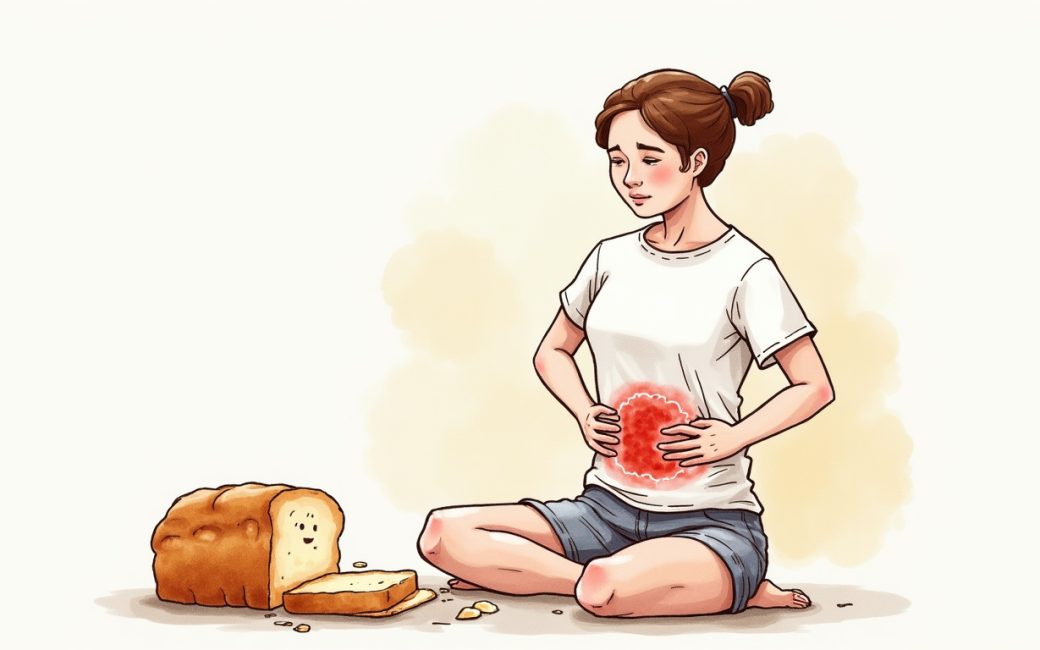
Eating wheat, barley or rye
In celiac disease, eating wheat, barley or rye sets off an autoimmune response, not a simple digestive upset. The gluten proteins in those grains prompt the immune system to attack the lining of the small intestine, flattening the villi that absorb nutrients. Over time this damage produces both digestive symptoms (bloating, diarrhea, pain) and non-digestive ones, including fatigue, anemia, and bone density loss from poor nutrient absorption, as outlined by SNHH.
Because the damage is a measurable, diagnosable process, confirming celiac disease requires testing, not guessing from symptoms. The standard sequence is a blood panel — tTG-IgA is first-line — followed by an intestinal biopsy to confirm villous damage before any dietary change is made, since removing gluten first can mask the markers and produce a false negative. PIH Health notes this order matters precisely because the diagnosis depends on catching the immune reaction while it's active.
Once confirmed, a lifelong gluten-free diet is the only established treatment. It doesn't cure the autoimmune tendency, but it stops new damage and allows the intestinal lining to heal. That healing, and the drop in antibody levels that tracks it, generally unfolds over months rather than days — some digestive symptoms, like bloating and diarrhea, often ease within a few weeks of strict avoidance, while fatigue, anemia, and other nutrient-related effects take longer to resolve as the intestine repairs itself and absorption improves.
Symptoms after gluten but celiac tests negative and wheat allergy excluded
If gluten still causes symptoms but celiac blood tests and a wheat allergy workup both come back negative, the likely explanation is non-celiac gluten sensitivity — a real reaction to gluten that doesn't involve the autoimmune intestinal damage seen in celiac disease. Wheat allergy itself is a different mechanism again: it's an immune reaction to proteins in wheat (not gluten specifically), mediated by IgE antibodies, and it can produce hives, swelling, or respiratory symptoms within minutes to hours — distinct from both the autoimmune damage of celiac disease and the delayed, non-autoimmune symptoms of gluten sensitivity. There's no blood marker or biopsy finding that confirms gluten sensitivity directly, so it's identified by process of elimination.
That process looks like this:
- Remove gluten completely for a defined period while keeping a symptom log — not a vague "cutting back," but a structured elimination.
- Reintroduce gluten deliberately afterward and watch whether the same symptoms return.
- If symptoms reliably reappear with gluten and stay absent without it, the pattern supports non-celiac gluten sensitivity rather than celiac disease or wheat allergy.
Unlike celiac disease, management here is generally about reducing gluten to a level that keeps symptoms under control rather than the zero-tolerance avoidance a celiac diagnosis requires. The key is doing the elimination and reintroduction in sequence, rather than drawing conclusions from one bad day after a sandwich.
Symptoms persist despite avoiding obvious gluten foods
If symptoms continue after cutting out bread, pasta and other obvious sources, the most common cause is gluten the reader isn't aware of, not treatment failure. Gluten hides in sauces, soups, processed meats, and seasoning blends, and it also transfers through shared equipment — a toaster, a cutting board, a fryer used for breaded foods — even when the food itself is gluten-free.
The fix is methodical:
- Re-check labels for wheat, barley, rye, or malt listed under less obvious names.
- Identify shared surfaces and equipment at home and when eating out, and separate them rather than assuming a quick wipe-down is enough.
- Give the cleaned-up routine a few weeks to show whether symptoms settle.
If symptoms still don't resolve once cross-contact is genuinely eliminated, that's a signal to go back to a clinician rather than add more restrictions — it may mean the original diagnosis needs reassessment, or that another condition is contributing. Capital Digestive Care and UMMHealth both describe persistent symptoms despite dietary compliance as a reason for follow-up testing rather than stricter self-policing.
Bloating and pain after bread
Bloating and pain after eating bread doesn't automatically mean gluten is the trigger — wheat also contains fermentable carbohydrates called FODMAPs, and those can cause the same bloating and cramping through a completely different mechanism, one shared with irritable bowel syndrome. Someone who feels better cutting out bread may be reacting to the FODMAP content of wheat rather than the gluten itself.
The order of operations matters: test for celiac disease — and rule out wheat allergy — before assuming the trigger is gluten, because once gluten is removed from the diet, celiac serology becomes unreliable. Gastromed Healthcare and Davidson GI both flag this sequencing issue as a common reason people self-diagnose incorrectly and restrict their diets further than necessary. Once celiac disease and wheat allergy are excluded, a low-FODMAP trial, done with guidance rather than guesswork, can isolate whether wheat's carbohydrate content — not its gluten — is the actual problem. Targeting the right trigger avoids years of unnecessary gluten avoidance for a digestive issue that gluten has nothing to do with.
Celiac disease
Celiac disease is an autoimmune condition, not a food preference or a trend diet, and that distinction shapes everything about how it should be investigated. It's triggered by gluten but driven by the immune system's attack on the small intestine, confirmed through serology and biopsy, and managed only by a lifelong, strict gluten-free diet rather than an occasional cutback.
For anyone still working out which category their symptoms fall into — celiac disease, wheat allergy, or non-celiac gluten sensitivity — the next concrete step is getting tested while still eating gluten, not adjusting the diet first and hoping the symptoms sort themselves out.