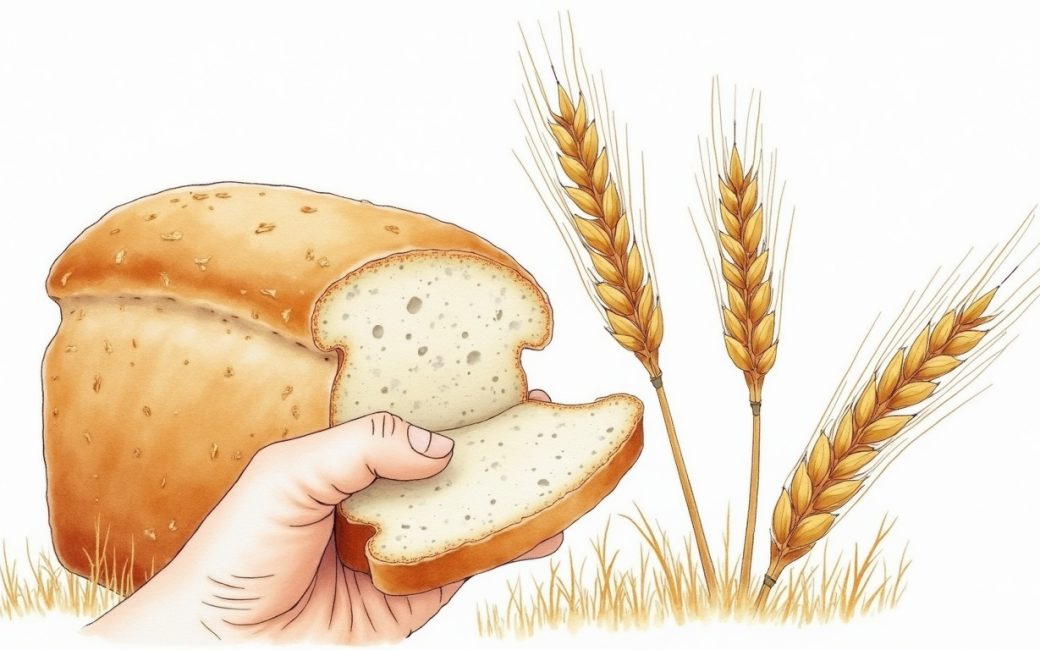
Eating wheat, barley or rye
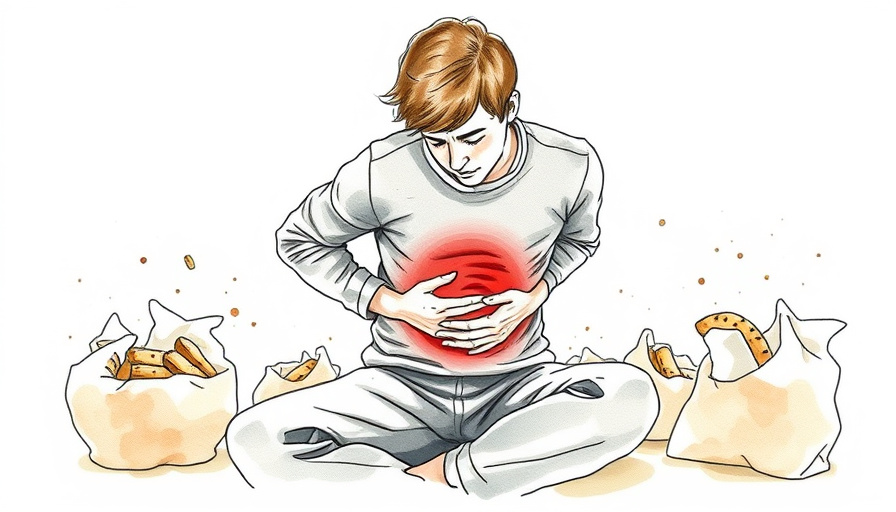
Celiac disease starts with a food, not a feeling. Eating wheat, barley or rye introduces gluten — the storage protein in those three grains — into the digestive tract of someone whose immune system is primed to treat it as a threat. That immune response is what separates celiac disease from every other reaction to gluten: it is autoimmune, meaning the body's own defenses turn on its own tissue rather than simply reacting to an irritant.
In a person with celiac disease, gluten exposure triggers an immune cascade that targets the lining of the small intestine. Repeated exposure damages the villi — the finger-like projections that absorb nutrients — flattening them over time, a process clinicians grade on the Marsh classification scale. That damage is why celiac disease produces such a wide symptom list: digestive complaints like diarrhea, gas and bloating sit alongside non-digestive ones like fatigue, anemia, joint pain and skin rashes, because a damaged intestine absorbs iron, folate, and other nutrients poorly regardless of what part of the body needs them.
Confirming this requires a specific order of testing, and it is the step most often skipped by people who assume gluten is their problem and cut it out before seeing a clinician. Standard practice is a blood test — most commonly the tTG-IgA antibody test — followed, if positive, by an intestinal biopsy taken during endoscopy to confirm and grade the damage directly. Both steps depend on gluten still being in the diet; the antibodies and the intestinal changes they trigger recede once gluten is removed, and testing after weeks of avoidance can produce a false negative that misses real disease. Someone who has already gone gluten-free before testing should talk to a clinician about a supervised gluten challenge rather than trusting a test taken too late.
Once celiac disease is confirmed, the treatment is not adjustable. A strict, lifelong gluten-free diet is the only way to let the small intestine heal, and Mayo Clinic describes it as the sole treatment for the condition — not a preference among several options, and not something to be relaxed once symptoms improve.
Symptoms after gluten but celiac tests negative and wheat allergy excluded

If someone reacts to gluten but blood tests and biopsy come back clear, and an allergist has ruled out an IgE-mediated wheat allergy through skin or blood testing, the remaining diagnosis by exclusion is non-celiac gluten sensitivity. There is no antibody or biopsy finding that confirms it directly — it is defined by what it is not, which makes the sequence of ruling things out matter as much as any single test.
The practical next step, once celiac disease and wheat allergy are both excluded, is a structured elimination:
- Remove all sources of gluten from the diet for a defined period while keeping a record of symptoms, not just whether they're present but their severity and timing relative to meals.
- Reintroduce gluten deliberately, in a known amount, rather than drifting back into it through convenience foods.
- Compare the record from before and after reintroduction to see whether symptoms return in a pattern that tracks with gluten specifically, rather than with a change in overall diet.
If symptoms reliably return with reintroduction and settle with removal, non-celiac gluten sensitivity is a reasonable working diagnosis. Unlike celiac disease, it does not require zero tolerance — Cleveland Clinic notes that management is about avoiding gluten to the point of symptom relief, not adhering to the same strict, biopsy-driven threshold that celiac disease demands. That distinction matters practically: a person with non-celiac gluten sensitivity who has an occasional, small exposure is not risking the intestinal damage that a person with celiac disease is.
Symptoms persist despite avoiding obvious gluten foods
The most common reason a gluten-free diet appears to fail is that it isn't actually gluten-free — gluten is still entering the diet through routes the person hasn't accounted for. Before reconsidering a diagnosis, the first move is to audit labels and preparation surfaces, not to assume the diet itself doesn't work.
Some foods are unmistakably built around wheat, barley or rye. Others carry gluten only because of how they're processed, sauced, or thickened, and that's where most persistent exposure hides.
| Food type | Gluten status | Why |
|---|---|---|
| Eggs | Naturally gluten-free | Contain no wheat, barley or rye protein; risk comes only from how they're prepared (a shared griddle, an omelet with a flour-thickened filling) |
| Fresh meat, poultry, fish | Naturally gluten-free | Gluten enters only if breaded, marinated, or seasoned with a wheat-based sauce |
| Soy sauce | Often contains gluten | Traditionally brewed with wheat unless labeled gluten-free or tamari |
| Deli meat and processed meat | Variable | Fillers, binders and flavorings can introduce gluten even when the meat itself is plain |
| Soups and sauces | Frequently hidden source | Flour is a common thickener |
| Beer | Contains gluten | Brewed from barley unless specifically made gluten-free |
| Oats | Risk depends on processing | Oats are not a gluten grain but are commonly cross-contacted during growing, transport or milling with wheat, barley or rye |
Beyond ingredients, shared preparation surfaces are an easy source to overlook: a toaster used for regular bread, a cutting board or colander used for wheat pasta, or fryer oil shared with breaded foods can all transfer gluten to food that started out free of it. Removing these cross-contact sources — separate toasters, dedicated cookware, checking "may contain" statements on packaging — is the next step before assuming the diet has failed.
If symptoms settle once hidden gluten and cross-contact are addressed, the original diagnosis stands and the diet simply needed tightening. If they don't settle even after a careful audit, that's the point to revisit the diagnosis itself with a clinician, rather than continuing to restrict the diet further without a clear target.
Bloating and pain after bread
Bloating and pain after eating bread doesn't automatically point to gluten — wheat carries other components that produce the same symptoms, and treating gluten as the default suspect can lead to years of unnecessary restriction. Wheat contains fructans, a type of fermentable carbohydrate grouped under FODMAPs, and these are digested poorly by many people regardless of whether they react to gluten at all.
This matters because someone with irritable bowel syndrome, or a sensitivity to FODMAPs generally, will often feel better cutting out bread — but for the wrong reason. They're avoiding the fructans wheat happens to contain, not the gluten protein, and the same symptoms would appear with other high-FODMAP foods like onions, garlic, or certain fruits that have nothing to do with gluten.
The NHS describes food intolerance broadly as a difficulty digesting certain foods that produces symptoms like bloating and stomach pain, distinct from an allergic or autoimmune reaction — which is exactly the category FODMAP sensitivity and IBS fall into. Because the symptom overlap with celiac disease and gluten sensitivity is so close, testing for celiac disease while still eating gluten should come before self-diagnosing a gluten problem. Ruling out celiac disease first, then testing whether a low-FODMAP approach resolves symptoms, targets the actual trigger instead of removing an entire food category on the assumption that gluten is responsible.
Celiac disease
Celiac disease is an autoimmune condition, not a food preference or a sensitivity that varies day to day. In someone with the condition, gluten triggers the immune system to attack the lining of the small intestine, and that damage persists as long as gluten remains in the diet. The Food Allergy Research & Resource Program at the University of Nebraska–Lincoln describes celiac disease as an immune-mediated reaction to gluten that causes damage to the small intestine, which distinguishes it clearly from an allergy — where the immune system responds to a protein as a threat but doesn't cause the same kind of chronic structural damage — and from a sensitivity, where no autoimmune or allergic mechanism has been identified at all.
That mechanism is why testing has to happen before treatment, not after. Diagnosis relies on detecting antibodies produced by the immune response and confirming the resulting intestinal damage directly, and both depend on active gluten exposure. Someone who suspects celiac disease and stops eating gluten first risks a test that comes back falsely clear, not because the disease isn't present, but because the antibody levels and the intestinal changes have already started to resolve.
Non-celiac gluten sensitivity
Non-celiac gluten sensitivity describes symptoms that appear after eating gluten without the autoimmune damage or the antibody markers found in celiac disease. It sits between celiac disease and ordinary food intolerance: real enough to produce fatigue, bloating, and gastrointestinal discomfort, but without a positive biopsy or blood test to confirm it directly.
Because there's no definitive test, the diagnosis depends on ruling out celiac disease and wheat allergy first, then observing how symptoms respond to removing and reintroducing gluten. Cleveland Clinic frames gluten intolerance in these terms — a reaction that causes real symptoms but doesn't involve the same immune attack on the intestine that defines celiac disease, and doesn't require the same zero-tolerance standard for treatment. That's the practical difference for someone living with the diagnosis: a small, accidental exposure is uncomfortable, not damaging.
| Celiac disease | Wheat allergy | Non-celiac gluten sensitivity | |
|---|---|---|---|
| Mechanism | Autoimmune attack on the small intestine | IgE-mediated allergic reaction | Unclear; no autoimmune or allergic marker identified |
| Confirming test | Blood antibody test plus intestinal biopsy | Skin prick or allergy blood test | None; diagnosed by exclusion and elimination/reintroduction |
| Gluten tolerance | None; even small amounts cause damage | N/A — reaction is to wheat protein generally | Some tolerance possible; managed to symptom relief |
Small intestine damage
Small intestine damage in celiac disease is specific and visible: the villi that line the intestine and absorb nutrients flatten under sustained immune attack, a change clinicians grade using the Marsh classification during biopsy. That's the physical finding that separates celiac disease from a sensitivity — no biopsy in non-celiac gluten sensitivity or wheat allergy shows the same structural change, however severe the symptoms feel to the person experiencing them.
The consequence of that damage is malabsorption: iron, folate, calcium and fat-soluble vitamins all pass through a flattened intestine less efficiently, which is why celiac disease so often shows up as anemia or low bone density rather than only as digestive symptoms. Mayo Clinic notes that a gluten-free diet is the treatment that allows this intestinal lining to heal, and healing is gradual — improvement in villi structure lags behind the drop in antibody levels, which is one reason follow-up testing continues well after diagnosis rather than stopping once symptoms improve.
If bloating, fatigue or digestive pain after gluten hasn't been worked through this sequence — celiac testing while still eating gluten, wheat allergy ruled out, hidden sources and cross-contact checked, FODMAPs considered — the next step is a conversation with a clinician about which test comes first, not another round of dietary guessing.